Investing in Canadian Industrial Real Estate: Essential Guide
Discover how to evaluate, finance, and manage Canadian industrial real estate assets. Learn about zoning classes, clear heights, power requirements, and key regional hubs across Ontario, Quebec, and Western Canada.
Industrial real estate in Canada has evolved into one of the most resilient and sought-after commercial property classes. Driven by e-commerce expansion, supply-chain re-shoring, logistics hubs, and advanced manufacturing, industrial assets offer investors long-term leases, high credit quality tenants, and low ongoing maintenance burdens relative to multi-family or office assets. However, buying or developing industrial space requires specific technical, legal, and operational knowledge.
Whether you are considering small-bay multi-tenant units or modern logistics distribution centers, this guide outlines the essentials of navigating Canada's industrial property landscape.
Understanding Industrial Property Types
Industrial real estate is categorized based on physical design, power capacity, logistics accessibility, and municipal zoning:
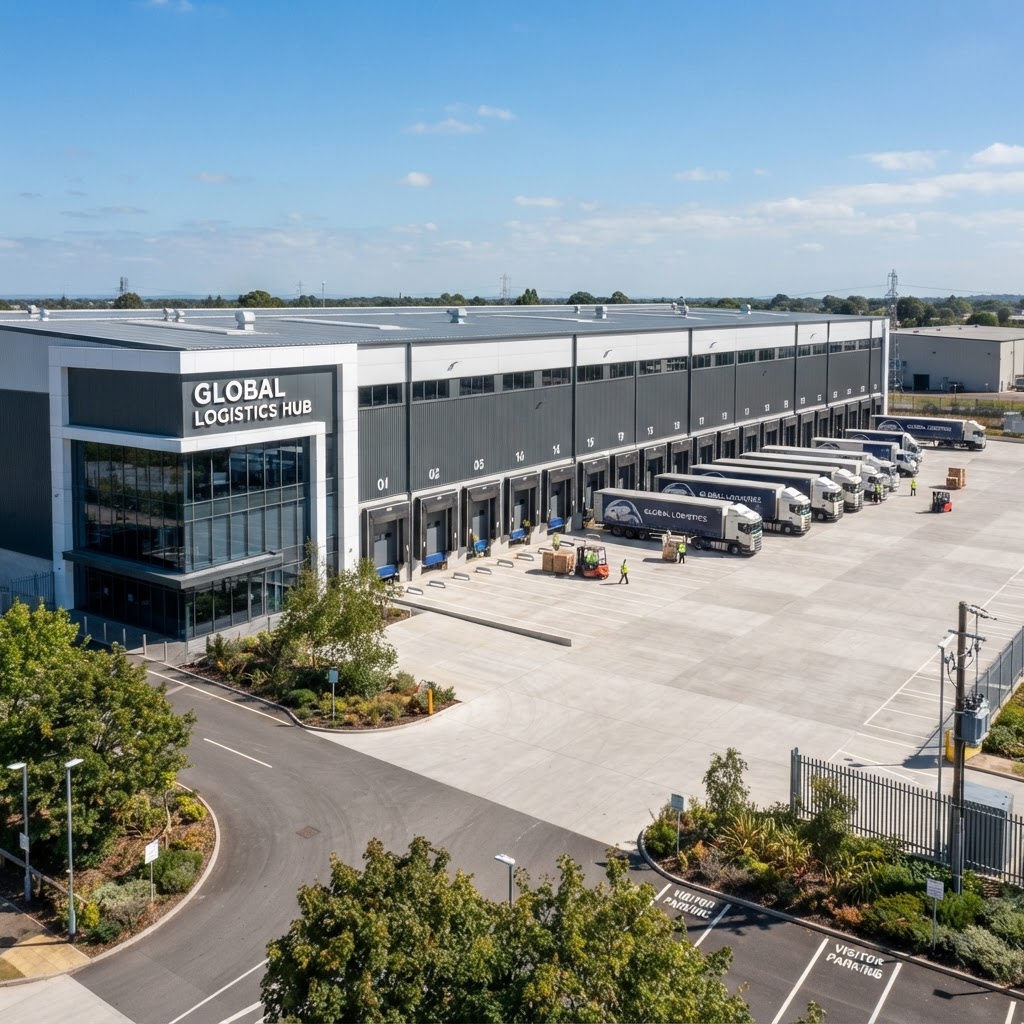
- Big-Box Distribution & Logistics: These facilities typically exceed 100,000 square feet, offering clear ceiling heights of 32 to 40+ feet, abundant truck court depth, and drive-in or dock-level doors. They are usually situated near key transportation arteries such as Ontario's 400-series highways or Alberta's Queen Elizabeth II corridor.
- Flex Industrial / Small-Bay: Often sized between 1,500 and 15,000 square feet per unit, these spaces combine warehouse facilities with office, trade showroom, or service bays. They attract local contractors, trades, and light assembly businesses.
- Manufacturing & Processing: Specialized facilities tailored for food processing, fabrication, heavy equipment repair, or chemicals. These require heavy mechanical infrastructure, extensive power feeds, and strict drainage or environmental controls.
- Outside Storage & Yard Space (IOS): Industrial Outdoor Storage encompasses land zoned for transport truck parking, container holding, pipe yards, or heavy equipment laydown. Given rising municipal land constraints, zoned yards represent high-margin, low-capex investment opportunities.
Critical Technical Specifications to Evaluate
When reviewing an acquisition, the physical metrics determine tenant desirability and future lease rates. Before running financial models on our Calculators, inspect these critical components:
- Clear Ceiling Height: Modern logistics tenants require a minimum of 28 to 36 feet clear height to optimize vertical pallet racking. Older facilities with 14 to 18-foot heights trade at a discount and are better suited for service or manufacturing users.
- Power Capacity: Modern manufacturing and automated warehousing demand significant electrical service (600 volts, 3-phase, 800+ amps). Upgrading hydro capacity through provincial utilities like Hydro One, BC Hydro, or Hydro-Québec can incur substantial delays and capital expenditure.
- Loading Docks & Doors: Evaluate the ratio of dock-level doors (for 53-foot trailers) to drive-in grade-level doors. The truck apron must provide at least 120 to 130 feet of turning room.
- Floor Load Capacity: Reinforced concrete slab depth (typically 6 to 8+ inches) and structural weight-bearing capacity determine whether tenants can install automated pickers or heavy manufacturing equipment.
Municipal Zoning and Environmental Due Diligence
Industrial land uses face tight municipal scrutiny across Canada. Before committing capital, consult with our AI Advisor and verify local municipal bylaws:
Zoning Classifications
Municipalities generally delineate between Light Industrial (e.g., M1/M2 in Ontario, I-1 in British Columbia), Medium Industrial, and Heavy Industrial.
- Light Industrial: Typically restricts outdoor storage, chemical processing, and noise pollution, favoring warehousing and clean assembly.
- Heavy Industrial: Permits intensive processing, continuous trucking, and exterior materials storage, but comes with buffer zone rules relative to residential communities.
- Legal Non-Conforming Uses: Be cautious when assuming existing uses will remain permitted. If a prior tenant acquired a variance or grandfathered right, that variance might terminate upon a change of tenancy.
Environmental Site Assessments (ESA)
Environmental liability in Canada operates on strict liability principles across provincial jurisdictions, meaning owners can inherit remediation costs caused by historical operations.
- Phase I ESA: A mandatory historical records review and site walkthrough to determine whether Potential Environmental Concerns (PECs) exist.
- Phase II ESA: Soil, vapor, and groundwater testing if Phase I identifies historical dry cleaners, underground storage tanks (USTs), automotive repair, or heavy chemical handling on or near the site.
Canadian Industrial Regional Trends
- Greater Toronto Area & Southwestern Ontario: Canada's largest industrial market, anchored by cross-border trade routes and strong manufacturing ties. Suburban hubs like Peel Region (Mississauga, Brampton), Milton, and Cambridge maintain low vacancy despite periodic delivery surges.
- Greater Vancouver & Lower Mainland: Characterized by geographic land scarcity bounded by the Pacific Ocean, mountains, and the Agricultural Land Reserve (ALR). This scarcity drives multi-storey warehouse development and stratatized industrial condo ownership.
- Calgary & Edmonton: Alberta's distribution nexus offers competitive land costs, zero provincial sales tax, and rapid logistics connections across Western Canada. Calgary's Rocky View County has become a prominent big-box fulfillment hub.
- Greater Montreal: An essential multi-modal gateway linked to the Port of Montreal, with expanding logistics parks along the Autoroute 20, 30, and 40 corridors.
Commercial Lease Structures
Industrial assets in Canada are standardly leased under Triple Net (NNN) terms. Under a true net lease, the tenant pays a base minimum net rent per square foot plus Additional Rent (operating costs, property taxes, insurance, and common area maintenance—often aggregated as T&I or CAM).
Key lease considerations include:
- Capital Expenditure vs. Maintenance: Clarify whether structural repairs, such as roof membrane replacements or structural slab leveling, can be amortized back to the tenant through operating costs.
- Indemnification & Restoration Clauses: Ensure the tenant is strictly responsible for decommission and environmental sign-off upon departure, returning the unit to its base building condition.
To cross-check how commercial acquisitions compare with other asset classes, review our Buying Guides, benchmark your portfolio's performance using our Health Check, access reference materials in our Resource Library, or discuss market trends with active investors on the Q&A Community.
Related Articles
Related Questions
What are the best cities in Canada for real estate investment in 2024?
Top Canadian Cities for Real Estate Investment 1. Calgary, Alberta - Strong population growth - Relatively affordable...
521203Can I legally rent my basement apartment in Ontario?
Short Answer Yes, but only if it meets specific legal requirements. Requirements To legally rent a basement apartmen...
47892Is this condo reserve fund healthy? How do I evaluate?
How to Evaluate a Condo Reserve Fund Step 1: Review the Reserve Fund Study Every condo corporation in Ontario must ha...
41578How much should I budget for annual home repairs?
The 1% Rule A widely-used guideline is to budget 1-2% of your home's value annually for maintenance and repairs. Exa...
35654